Most people do not learn to speak a language simply by knowing its grammar. They improve by speaking.
That creates a problem for English learners who may understand written English reasonably well but have few opportunities to hold extended conversations in the language.
A private tutor can help, but regular lessons cost money and need to be scheduled. Group classes provide structure but give each participant limited speaking time. Talking to native speakers is useful but not always practical.
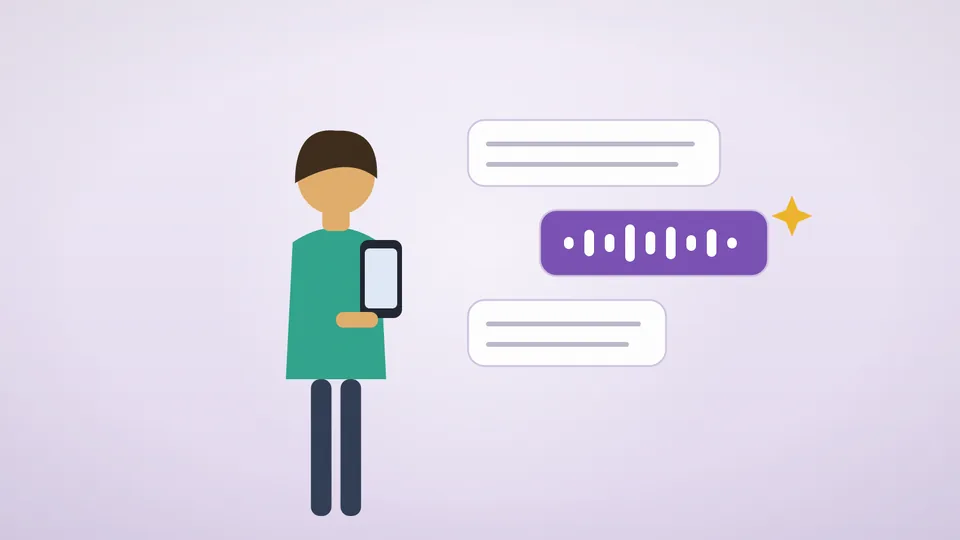
Artificial intelligence is introducing another option: a conversation partner that is available whenever the learner wants to practice.
Israeli startup Loora has built its English-learning product around that model. The larger question is whether talking to an AI system actually makes someone a better English speaker.
Why conversational AI is different from another language-learning app
Digital language learning is not new. Vocabulary exercises, recorded lessons and automated grammar tests have existed for years.
Generative AI changes the experience because software can respond to what the learner actually says. Instead of selecting a predefined answer, a user can have a conversation, change subjects, make mistakes and continue speaking.
Loora's product focuses on spoken English conversations and feedback, with lessons, role-play and open conversation among the available formats. Readers interested in the mechanics can see how Loora's AI speaking practice works.
The strongest argument for this type of tool is not that AI knows more about English than a teacher. It is availability.
Someone who is uncomfortable speaking English in front of colleagues may be willing to practice with software for 15 minutes every day. That amount of repeated speaking time can be difficult to reproduce in a conventional weekly class.
Why this matters in Israel
English has an unusually important practical role in Israel. It is widely used in technology, academia, tourism, international business and work with overseas customers or colleagues.
But reading and understanding English is not the same skill as speaking it spontaneously.
Someone may be able to read a technical document or follow a television program while still hesitating during a meeting, interview or telephone call. That gap creates an obvious market for tools focused specifically on conversation.
Loora reported in September 2026 that its platform had reached around 15 million users worldwide. Israeli business media reported approximately 200,000 users in Israel. Those figures originate with the company and should be treated as company-reported numbers rather than an independent measurement of market share.
The company also announced a $22 million Series B financing round led by Union Tech Ventures, bringing its reported total funding to more than $43 million. The investment is intended in part to support international expansion and further product development.
What does research say about practicing with AI?
Evidence around generative AI in language learning is still developing, but there are good reasons to expect conversational systems to help with some aspects of speaking.
They can provide repetition, immediate responses and a relatively low-pressure environment. A learner does not need to worry about boring another person, taking too long to answer or making the same mistake repeatedly.
A 2026 controlled study examining ChatGPT-assisted English-speaking practice found improvements in areas including fluency and syntactic complexity. It did not find a distinct accuracy advantage over teacher-led instruction.
That result supports a more realistic way to think about AI tutors: they may be useful for increasing practice, but that does not mean they automatically outperform human teachers across every dimension of language learning.
Fluency and accuracy are different problems
People often describe someone as "good at English" as though it were one skill. It is not.
A learner can speak quickly but make frequent grammatical errors. Another learner can construct careful sentences but pause so often that conversation becomes difficult. Pronunciation, vocabulary and listening comprehension are separate dimensions as well.
AI conversation tools may be especially useful where repetition matters.
Someone preparing for a job interview can repeatedly practice explaining professional experience. A salesperson can rehearse a product presentation. A student can practice answering open-ended questions. Repetition may increase comfort and automaticity.
Accuracy is more complicated. Automated feedback is useful only when the system identifies the problem correctly and explains it in a way the learner understands.
Human teachers also retain advantages that are difficult to reproduce: recognizing persistent patterns across a student's learning history, adapting pedagogy, understanding cultural nuance and deciding when an error should be corrected immediately versus ignored so conversation can continue.
What employers should evaluate before using AI language training
The same technology is increasingly relevant to companies.
For an employer with staff in several countries, one-to-one tutoring can become expensive and difficult to coordinate. AI practice potentially allows employees to train on their own schedule.
But corporate buyers should evaluate more than whether an application can hold a convincing conversation. They should ask what speaking skills the product is designed to improve, whether employees can practice relevant workplace situations, how progress is measured, how accurate feedback is, what happens to voice recordings and conversation data, and when human instruction should be added.
Privacy deserves particular attention with voice-based systems because speaking practice may include personal information or workplace scenarios.
Users should read the current privacy terms of any service they use and avoid entering confidential business, medical, legal or personal information unless they understand how it will be handled.
AI is also entering formal English education
The growth of consumer applications is happening alongside broader institutional experimentation with AI-assisted English instruction.
Israel has also been expanding AI-related English-learning initiatives within public education. That does not mean every commercial AI tutor is part of a government program.
No evidence reviewed for this article establishes that Loora supplies Israel's national school initiative, and the two subjects should not be conflated.
What they do show together is that English-language education has become an important testing ground for generative AI. Language learning involves exactly the type of repeated interaction at which conversational systems can be useful.
A supplement rather than an automatic replacement
The useful question is probably not whether an AI tutor is "better" than a human teacher. For many learners, the technologies solve different problems.
Teachers provide instruction, judgment, motivation, social interaction and structured learning. AI provides availability and repetition.
A learner who has access to both may use a teacher to identify weaknesses, explain difficult concepts and provide nuanced feedback, while using AI for additional speaking practice between lessons.
For someone without regular access to a teacher, an AI conversation tool may provide practice that otherwise would not happen at all. That is a meaningful benefit, but it should not be confused with proof that every conversation produces measurable improvement.
As AI language tools become more common, learners, schools and employers will increasingly want evidence about outcomes, data protection and which skills actually improve.
For Israelis who need English for work, study or international communication, the attraction is easy to understand: speaking more frequently is difficult if nobody is available to speak with.
AI can remove that obstacle. Whether it turns practice into lasting improvement depends on how the technology is used, what feedback it provides and whether it is combined with the other parts of language learning that software cannot yet fully replace.