Iran has presented the United States with a seven-day plan that Tehran says could reopen the Strait of Hormuz, halt regional fighting and return Washington and Tehran to negotiations. The Wall Street Journal reported that President Donald Trump rejected the proposal. As of September 26, however, that claim rests on unnamed U.S. officials. The White House has not confirmed it, and Reuters said it could not independently verify the report.
What did Iran offer?
Iranian Foreign Minister Abbas Araqchi said on September 25, on the sidelines of the UN General Assembly in New York, that Iran had sent the United States a “concrete seven-day plan” through Qatar. Under Tehran’s proposal, the Strait of Hormuz could reopen within seven days if Washington accepts Iran’s conditions.
Those conditions include lifting the U.S. naval blockade on Iranian ports, releasing frozen Iranian assets, easing or waiving sanctions on Iranian oil exports, and ending regional hostilities, including in Lebanon. The plan also calls for renewed U.S.-Iran negotiations.
Araqchi said the seven-day period would begin only after U.S. acceptance. According to his description, U.S. steps would occur during the first four or five days, the strait would open on day six, and talks toward a final agreement would begin on day seven.
What was reported about Trump?
The Wall Street Journal, citing unidentified U.S. officials, reported that Trump rejected the proposal because he was skeptical Tehran would meet U.S. demands. The paper also reported that Trump told aides he expects U.S. bombing of Iran to resume after the November 3, 2026 midterm elections.
That is not a confirmed decision that strikes will resume. It is an expectation attributed to Trump in private conversations, and the report says the possible scope remains unclear and his position could change.
Reuters could not verify the rejection
Reuters independently reported that Iran made the proposal, transmitted it through Qatari mediators and was still awaiting an American response. A U.S. official told Reuters that discussions through mediators had been “positive and constructive.”
Reuters, however, explicitly said it could not independently confirm the WSJ report that Trump had rejected the plan. The White House had also issued no public confirmation or denial by the research cutoff.
What has Trump said publicly?
On September 9, Trump publicly predicted that the war would end immediately after the U.S. midterm elections and accused Iran of prolonging the conflict to influence the vote. That differs from the new report: Trump’s public remarks concerned the war ending after the elections, while the WSJ says he privately expects bombing could resume afterward.
Secretary of State Marco Rubio said during UN General Assembly events that Trump remained open to a deal with Iran, while identifying Tehran’s nuclear program and support for armed groups as major obstacles.
Why the Strait of Hormuz matters
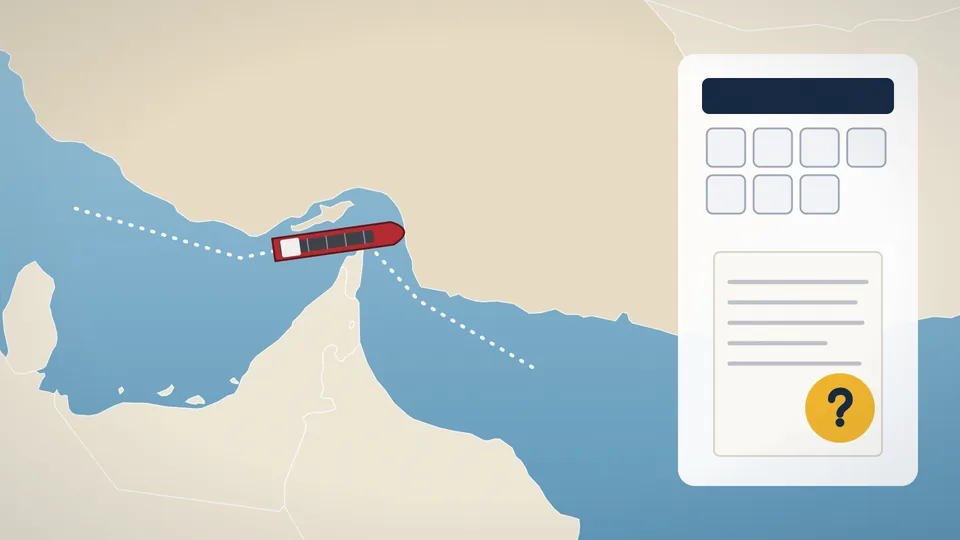
The International Energy Agency says roughly 20 million barrels per day of crude oil and petroleum products passed through the Strait of Hormuz in 2025, about 25% of global seaborne oil trade. Roughly 80% was headed to Asia. Around one-fifth of global LNG trade also normally passes through the strait.
Alternative pipelines cannot replace its full capacity, meaning prolonged disruption can affect Gulf exporters, Asian importers and global energy markets.
The Israel and Lebanon connection
The proposal matters to Israel because the conflict with Iran includes Israeli military operations and Tehran’s ceasefire terms cover regional fronts including Lebanon. A broader U.S.-Iran arrangement could therefore affect the Israel-Hezbollah conflict.
As of the research cutoff, no official Israeli government response to the specific proposal or reported Trump rejection had been located.
The seven-day clock has not started
Despite the name, no seven-day countdown is underway. Araqchi said the clock would start only if the United States accepts the proposal. As of September 26, Iran said it was still awaiting a U.S. response.
The distinction is therefore crucial: Iran’s proposal is public and documented; the claim that Trump has already rejected it and expects renewed U.S. bombing after the midterms remains a Wall Street Journal report based on unnamed U.S. officials and has not been independently confirmed by Reuters.