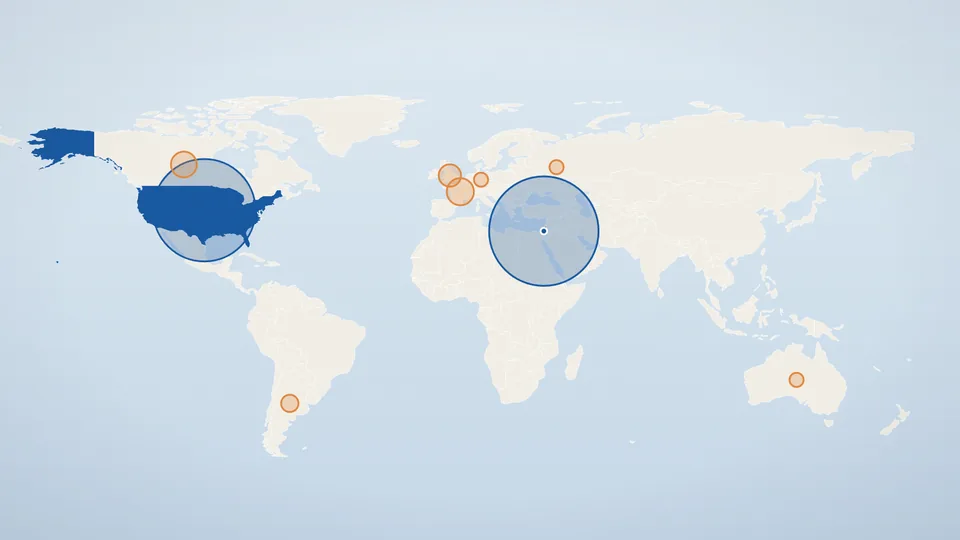
More than 20,000 new immigrants arrived in Israel from over 100 countries between September 23, 2025 and September 3, 2026, according to the Aliyah and Integration Ministry and the Jewish Agency’s summary for Hebrew year 5786. The figures show stronger aliyah from several Western countries, but they also reveal an important countertrend: total aliyah was about 6% lower than in the previous Hebrew year, largely because arrivals from Russia fell sharply.
Russia still led with 5,685 olim, followed by France with 4,364, the United States with 3,333 and the United Kingdom with 975. Ukraine accounted for 797 arrivals, Belarus 491 and Canada 440. Australia, Argentina, Georgia, South Africa, Germany and Brazil each contributed hundreds more.
Western growth did not reverse the overall decline
The most important distinction is between growth in specific countries and the worldwide total. Secondary analysis based on the official figures puts the decline in arrivals from Russia at roughly 37%. Because Russia had been such a large source of aliyah in recent years, that drop was enough to pull the total down even as several Western countries recorded gains.
It is therefore accurate to say that aliyah from parts of the West strengthened. It is not accurate to say that aliyah to Israel increased overall in 5786.
More than 28,000 aliyah files do not mean 28,000 future immigrants
Another widely cited figure is the opening of more than 28,000 aliyah files worldwide. France recorded 7,033 files, up from 5,349 in the comparison period, a 31.5% increase. The United States rose from 5,745 to 6,725, up 17.1%. Britain increased by 68%, while Australia was up almost 90%.
An aliyah file, however, is a step in an administrative process, not an arrival in Israel. Some files never result in immigration, and the published data do not provide a conversion rate from file opening to completed aliyah.
Percentages also need context. Australia’s nearly 90% rise reflected an increase from 311 to 590 files, or 279 additional files. France’s percentage growth was smaller, but the absolute increase was 1,684.
Who came, and where did they settle?
About 35% of the olim in the reporting period were ages 18-35, while roughly 24% were 17 or younger. The ministry also said 414 immigrant physicians were integrated into Israel’s health system during the year. That wording should be preserved: it does not necessarily mean that every physician arrived during the exact reporting window or completed every licensing stage within it.
Tel Aviv received 2,762 olim, Netanya 2,224, Jerusalem 2,134 and Haifa 1,504. The source-country mix matters because it affects Hebrew instruction, school placement, housing demand, credential recognition and local absorption services.
The figures are not yet a complete Hebrew-year total
The reporting window ends on September 3, 2026, before the end of 5786, and the overall figure was released as “more than 20,000,” not as a final exact total. It should also not be compared directly with calendar-year immigration figures without explaining the different time periods.
The clearest reading of the data is therefore two-sided: aliyah from several Western Jewish communities increased, and interest in moving to Israel rose, but the total number of arrivals declined. The next question is how many of the newly opened files eventually turn into completed moves.