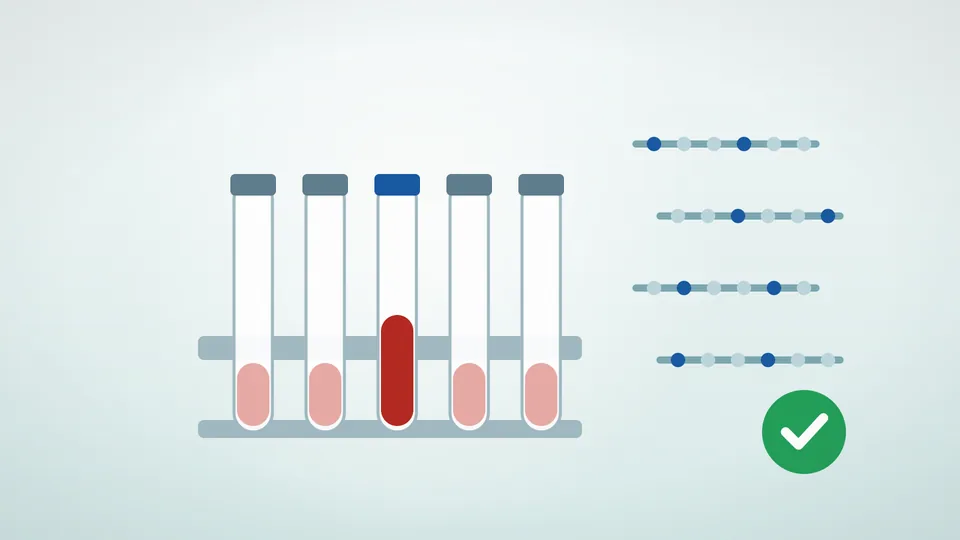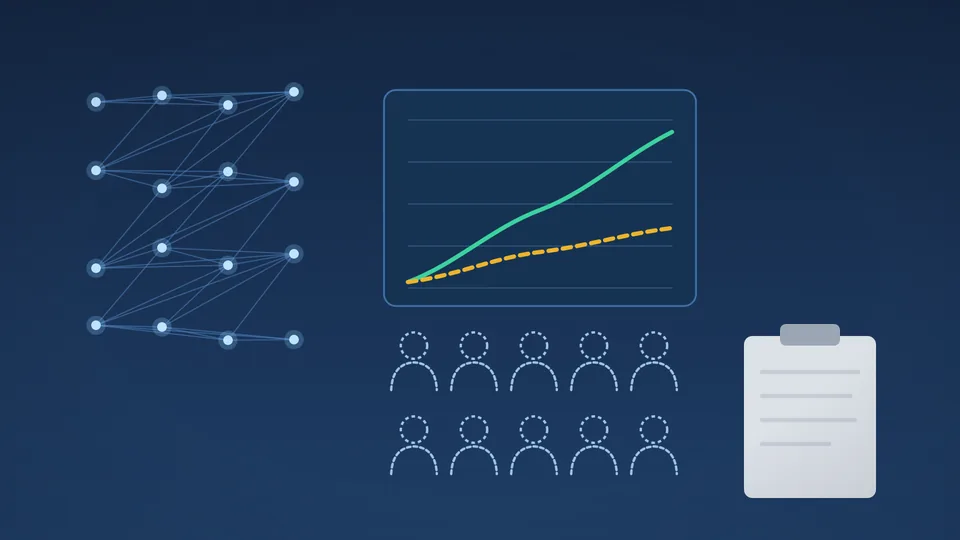
Artificial intelligence is already being used throughout medicine, from medical imaging to drug discovery. One of the less visible applications may ultimately prove just as important: using AI before a clinical trial begins.
Clinical trials are expensive, lengthy and uncertain. Researchers must decide which patients to enroll, what outcomes to measure, how treatment groups should be structured, how long a study should run and what statistical approach should be used. Those choices can influence whether a trial produces a meaningful answer.
Israeli company QuantHealth develops AI-based simulation tools designed to let pharmaceutical and biotechnology companies test some of those decisions virtually before committing to an actual trial.
The idea is attractive, but it needs careful interpretation. A simulated patient is not a real patient, and a predicted trial result is not proof that a drug works.
What does it mean to simulate a clinical trial?
Clinical-trial simulation uses mathematical and computational models to estimate what could happen under different study designs.
Imagine a pharmaceutical company preparing a trial for a new treatment. Before recruitment begins, the development team may want to know whether changing eligibility rules could alter the likely study population, whether another endpoint would make the trial more informative, or whether a different treatment schedule could change the probability of detecting an effect.
Traditionally, these decisions rely on previous research, biological reasoning, statistical modeling and expert judgment. AI adds another layer by analyzing large amounts of clinical and biological data and generating predictions across many possible scenarios.
QuantHealth says its system allows development teams to modify protocol variables and examine modeled effects on outcomes, feasibility, cost and other considerations. Readers can review QuantHealth's clinical-development simulation workflow to understand how the company describes that process.
The crucial word is "modeled." The output is a prediction, not a clinical result.
Why drug developers are interested
A poorly designed trial can consume years and large amounts of capital.
That creates a strong incentive to identify problems before the first patient is enrolled. If simulation can show that a proposed patient population is unlikely to produce a useful answer, or that an endpoint does not fit the expected treatment effect, developers may be able to redesign the study earlier.
The potential value is therefore broader than predicting success or failure. Simulation can function as decision support, helping teams compare trial structures, recruitment assumptions, patient subgroups and protocol choices.
Interest in this field is growing alongside pharmaceutical investment in artificial intelligence. In August 2026, QuantHealth announced a $45 million Series B financing round led by Qumra Capital, with participation from investors including Pitango HealthTech and Sanofi Ventures. Independent Israeli reporting confirmed the round.
The financing makes QuantHealth a timely Israeli example of a wider trend: AI companies are moving beyond early drug discovery into decisions made during clinical development itself.
The evidence problem cannot be skipped
The usefulness of any simulation depends on the model behind it.
If the underlying data are incomplete, unrepresentative or biased, a sophisticated model can still produce a misleading result. That is particularly important in medicine, where age, sex, genetics, disease stage, previous treatments and other variables may materially affect outcomes.
A model that performs well in one setting may not perform equally well in another.
QuantHealth publishes examples of validation and has reported that its platform has been used to simulate hundreds of trials. Those performance figures should still be understood as company-reported claims unless independently reproduced or validated through accessible external research.
That distinction is essential in any discussion of medical AI.
Regulators focus on whether the model is credible for a specific use
The US Food and Drug Administration has developed a framework for evaluating AI models used in drug and biological-product development. A major concept is "context of use."
In simple terms, the question is not whether an AI model is accurate in general. Regulators need to understand what decision the model is intended to support, what data it was built on, how it was evaluated and what the consequences would be if its output were wrong.
This is a useful way to understand clinical-trial simulation. A model used to explore alternative study designs is not necessarily being asked to do the same job as a model whose output contributes directly to a regulatory decision.
The more consequential the use, the stronger the supporting evidence needs to be.
Simulation does not replace a clinical trial
The most important limitation is also the easiest to misunderstand.
AI can simulate possible outcomes. It cannot establish that an experimental medicine is safe and effective in real patients merely because a model predicts that it will be.
Human biology is complicated, and unexpected effects are one reason clinical trials exist.
The more realistic near-term role for AI is therefore to improve decisions surrounding trials rather than eliminate the trials themselves. If a model helps researchers identify a weak study design earlier, it may save time and resources. If it helps teams examine patient populations or endpoints more systematically, it may improve decisions before enrollment begins.
But none of this removes the need for validation, independent scrutiny and appropriate regulatory oversight.
An Israeli healthtech story with a larger question behind it
QuantHealth is useful as a case study because the company sits at the intersection of Israeli AI, pharmaceutical research, clinical data and computational medicine.
The broader question is not whether one platform can predict every trial. It is whether drug development can become more predictive before companies expose patients and capital to decisions that are difficult to reverse.
AI systems can process more variables than a human team could reasonably examine one by one. That creates genuine potential. Medicine, however, has repeatedly shown that impressive predictions need to survive testing against reality.
Clinical-trial simulation is therefore best understood not as a shortcut around clinical science, but as another tool within it. If the technology matures with credible validation and clearly defined limits, it could change how trial designers approach some of their most expensive decisions.
The standard should remain straightforward: the more important the decision, the stronger the evidence required to trust the model helping to make it.