

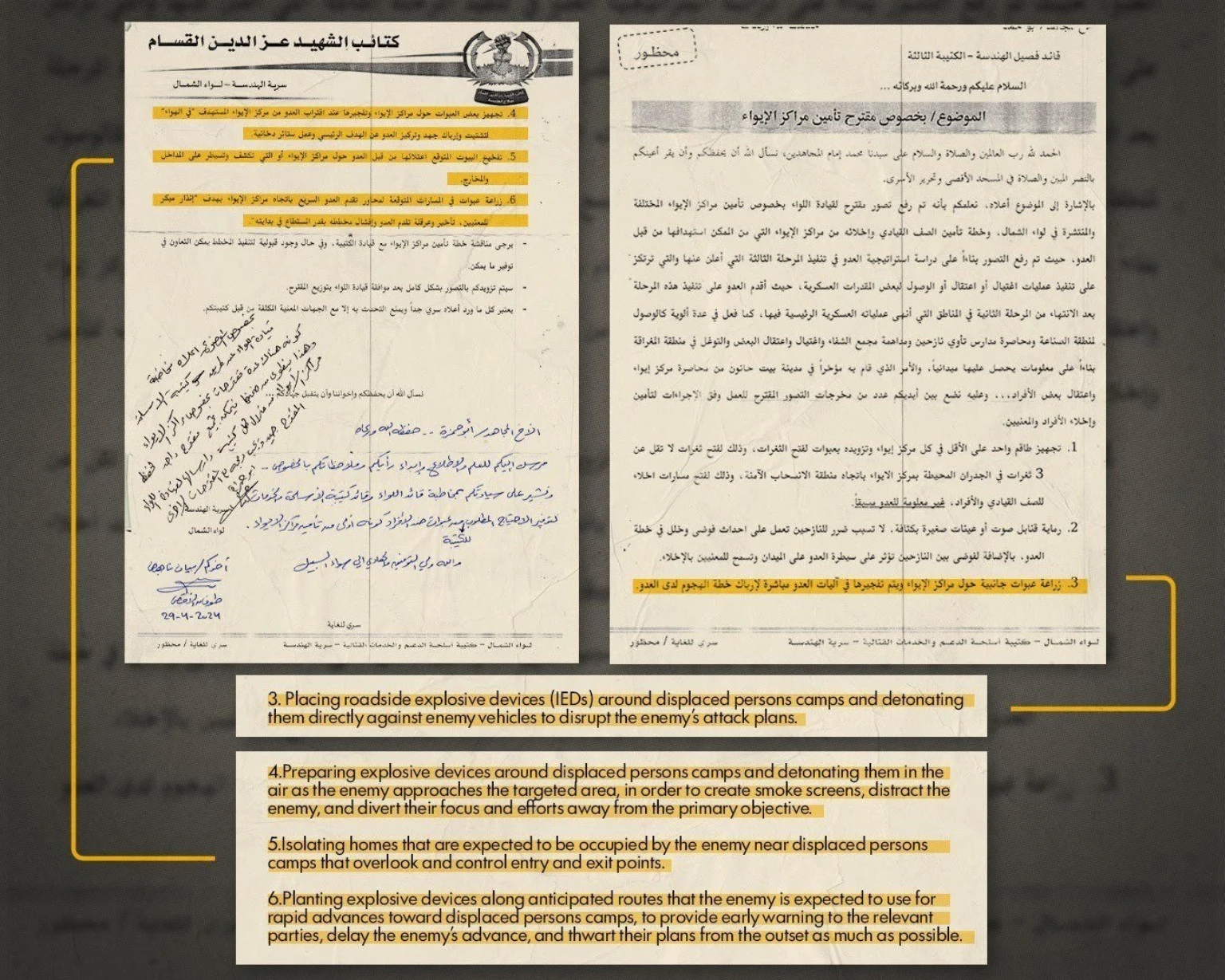
The IDF published the two Arabic pages on October 19, 2026, identifying them as an internal document from April 2024. They bear Qassam Brigades headings and name an engineering company in the Northern Brigade. A handwritten date on one page reads April 29, 2024.
The provisions connect civilian disorder with a military objective: keeping designated personnel’s way out open.
When the Crowd Becomes Part of the Diversion
One passage proposes sound grenades or small explosive devices to unsettle an approaching Israeli force and cause disorder among displaced people. The next connection is explicit: that confusion would interfere with control of the area and enable designated personnel to evacuate.
The shelter population’s reaction to the disturbance would become useful to personnel trying to withdraw.
The same passage says the diversionary devices should not injure the displaced. That instruction accompanies a plan to deliberately create disorder among them, inside an environment that other provisions would surround with explosives.
Displaced people are described separately from the leadership echelon and personnel who would benefit from evacuation.
Explosives Beyond the Shelter Entrance
The preparations spread outward from the shelter to the surrounding area. The text envisages explosive devices targeting approaching Israeli vehicles, further explosions intended to distract the force, and smoke to divert attention from its main objective.
Nearby buildings also enter the plan. Houses that troops might use, including properties overlooking access points, would be booby trapped. Other devices would hinder the expected Israeli advance and provide warning.
The result would be military obstacles around a civilian refuge, with displaced families sheltering nearby.
The IDF said the document showed Hamas’s readiness to endanger Gaza civilians to protect and evacuate its leaders and operatives.
The People the Exit Routes Were Meant to Serve
Alongside the obstacles, the document discusses ways through shelter boundaries toward withdrawal areas. It identifies leadership personnel and other members as the intended users of those routes.
Keeping the exits unknown to the approaching force was part of their value. The planners wanted designated personnel to have a way out while Israeli troops dealt with the situation around them.
The different measures therefore work toward the same objective. Warning would help personnel respond to an approach. Obstacles would interrupt it. Diversions would complicate control of the scene. The evacuation arrangements would let commanders and personnel use the resulting opening.
The passage concerning displaced people belongs within that sequence. It describes civilian disorder as a means of making the withdrawal easier, linking the shelter population directly to the military purpose of the plan.
Reading the Plan Behind the Shelter Label
The Arabic expression used throughout the pages means shelter centers. It can cover buildings and facilities accommodating displaced people, including sites with walls and nearby houses. The plan is not limited to a picture of tents in an open camp.
Its title refers to a proposal for securing those centers. The body places leadership evacuation and disruption of Israeli forces at the center of that task.
At the end, the document requests a discussion within battalion command. It says the full concept would follow the brigade’s approval.
The plan assigns civilians a role in the proposed arrangements. People who had sought shelter would face a disturbance designed to obstruct the Israeli response. For Hamas personnel preparing to withdraw, that same disturbance was intended to create an opportunity to leave.


